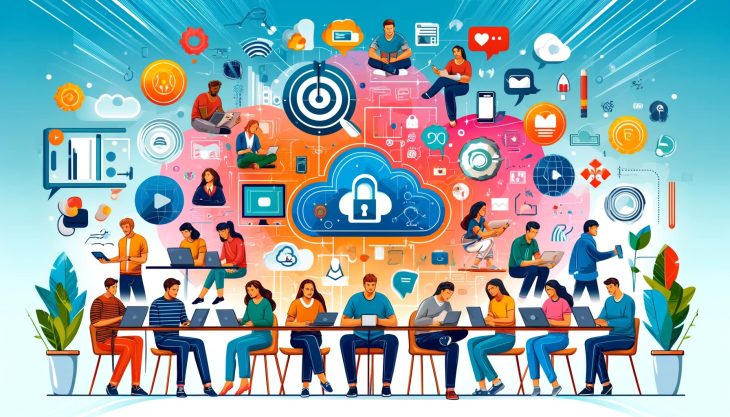
Digital Literacy and Digital Empowerment: The Basics
UNIT 1: Digital Literacy and Digital Empowerment
1. Definition of Digital Literacy:
- Digital Literacy refers to the ability to effectively and critically navigate, evaluate, and create information using a range of digital technologies. It encompasses a variety of skills, including the ability to find and consume digital content, create digital content, and communicate or share it.
- Key Components:
- Understanding how to use digital devices and the internet.
- Ability to evaluate the credibility of online information.
- Knowledge of privacy, security, and ethical issues in the digital world.
2. Current Trends of Digital Technology:
- Artificial Intelligence (AI): AI applications in various sectors such as healthcare, education, and finance.
- Internet of Things (IoT): Connected devices and smart homes.
- 5G Technology: Enhanced mobile broadband, massive machine-type communications, and ultra-reliable low-latency communication.
- Cloud Computing: Storage and computing power over the internet.
- Blockchain: Secure, decentralized technology for transactions.
3. Evaluating the Credibility of Online Information:
- Identifying Reliable Sources:
- Check the author’s credentials and the source of the information.
- Look for peer-reviewed articles and reputable news outlets.
- Fact-Checking:
- Use fact-checking websites such as Snopes, FactCheck.org, or PolitiFact.
- Critical Thinking:
- Question the purpose and bias of the information.
- Cross-check information with multiple sources.
4. Copyright and Plagiarism Awareness:
- Copyright: Legal right granted to the creator of original work for its use and distribution.
- Fair Use: Allows limited use of copyrighted material without permission for purposes such as criticism, comment, news reporting, teaching, scholarship, and research.
- Plagiarism: Using someone else’s work or ideas without proper attribution.
- Types of Plagiarism:
- Direct Plagiarism: Copying text without quotation marks or citation.
- Self-Plagiarism: Submitting your previous work as new.
- Mosaic Plagiarism: Blending copied material with your own text without citation.
- Accidental Plagiarism: Failing to cite sources correctly.
5. Important Applications in India:
- DigiLocker:
- A government initiative under Digital India, providing a secure digital locker to store documents/certificates issued by various authorities.
- Benefits: Reduces the use of physical documents, facilitates easier access, and promotes paperless governance.
- E-Hospitals:
- An initiative to provide efficient and hassle-free healthcare services through the integration of hospital management information systems.
- E-Pathshala:
- An online platform by the Ministry of Education to promote digital learning through free access to e-books and educational resources.
- SHIM (Social Health Insurance Management):
- Aims to streamline health insurance processes and enhance the accessibility of health services.
- E-Kranti (Electronic Delivery of Services):
- Part of the Digital India initiative, focusing on delivering government services electronically to ensure faster and more efficient service delivery.
- E-Health Campaigns:
- Initiatives aimed at improving public health awareness and digital healthcare access, including telemedicine and online health consultations.
Learning Outcomes:
- Understand the fundamentals of digital literacy and its importance in the modern world.
- Stay updated with the latest trends in digital technology and their applications.
- Develop skills to critically evaluate online information.
- Gain awareness of copyright laws and the importance of avoiding plagiarism.
- Familiarize with key digital applications promoted by the Indian government for enhanced service delivery and governance.
4 comments
Magnificent beat I would like to apprentice while you amend your site how can i subscribe for a blog web site The account helped me a acceptable deal I had been a little bit acquainted of this your broadcast offered bright clear idea
BWER Company provides Iraq’s leading-edge weighbridge solutions, designed to withstand harsh environments while delivering top-tier performance and accuracy.
World Cup 2026 qualifiers live score, road to USA Mexico Canada tournament
海外华人必备的iyf官方认证平台,24小时不间断提供最新高清电影、电视剧,无广告观看体验。