From Golden Eagle to Chained Bird: Derozio’s ‘To My Native Land’
Introduction
Let’s take a step back in time to the British Raj in India, and explore the intensity of a poem that expresses a nation’s aspiration to revive its lost glory. “To My Native Land” by Henry Louis Vivian Derozio is an expression of heartrending sorrow over the colonial subjugation of India and a clarion call for the restoration of its past grandeur.
Derozio was a pioneering figure in the Bengal Renaissance, a socio-cultural reform movement in India during the 19th century. Despite his short life, he made significant contributions to Indian literature and stirred nationalist sentiments among his students.
The Chained Eagle: Unraveling the Symbolism
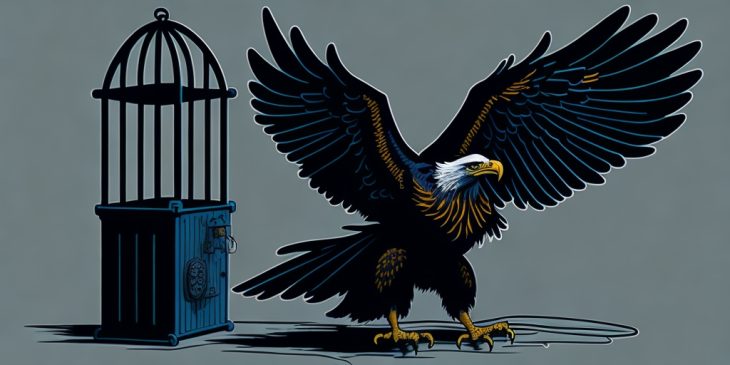
In this poem, Derozio employs potent imagery and symbolism to convey the plight of his homeland. Derozio’s use of the “eagle pinion” as a symbol is an evocative representation of India’s condition under British rule, illustrating the power of metaphor in poetry. Once soaring freely like a golden eagle, India is now depicted as a bird with its wings chained down, an emblem of a nation shackled by colonialism.
The Golden Past and the Bleak Present
The opening lines of the poem establish a stark juxtaposition between India’s once vibrant past and its grim present, embodying the tone of sorrow and longing that permeates the entire poem. The once radiant “beauteous halo” of India has now dimmed, replaced by the dust into which the once-revered nation is now groveling. Derozio’s lament for his fallen country is tangible, weaving a wreath of melancholy words that reveal the heartache of a nation subjugated and humiliated.
The “beauteous halo” is a significant symbol in the poem that could symbolize the divine respect and honor that was accorded to India in the past. The halo often represents sanctity and reverence in various cultures. In the poem, the halo around India’s brow signifies its once esteemed and almost divine status. The loss of this halo in the present time under British rule signifies the degradation of this reverence and respect.
The Power of Poetry: A Call for Revival
Beyond the pervasive despair, Derozio’s poem rises above being a simple lamentation for a fallen nation. It serves as a rallying cry, urging us to recollect and revive India’s past glory and seek its revival. Derozio voices his intention to dive into the annals of history, resurrect fragments of India’s bygone grandeur, and ignite the spirit of freedom and national pride.
Conclusion: The Poem’s Relevance Today
The poem’s relevance today can be demonstrated with contemporary examples. The struggle for freedom and dignity that India experienced under British rule resonates with the fights for social justice seen around the world today. Movements like Black Lives Matter in the United States, the fight for indigenous rights in places like Australia and Canada, or the ongoing struggle for autonomy in regions like Hong Kong, all echo the themes of subjugation and the desire for freedom expressed in Derozio’s poem.
Derozio’s “To My Native Land” isn’t just a poetic piece; it’s a historical document, a mirror reflecting the sociopolitical context of the time. Its themes of national pride, freedom, and resistance against oppression remain relevant even today, reminding us that the fight for freedom and dignity is timeless and universal.

2 comments
Thanks for sharing. I read many of your blog posts, cool, your blog is very good.
官方數據源24小時即時更新nba赛程比分、賽程表,以及NBA球星數據統計和表現分析。