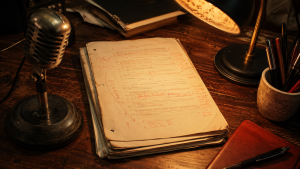
The Voice as Instrument: A Beginner’s Guide to Vocal Modulation
Imagine you’re listening to music. A song where every note is played at exactly the same volume, at exactly the same speed, at exactly the same pitch — for four unbroken minutes. No dynamics. No variation. Just an unbroken wall of identical sound.
Unbearable, isn’t it?
Now consider that this is precisely how most first-time public speakers sound to their audience. Not because they lack intelligence or depth, but because they haven’t yet learned the one thing that turns adequate speech into compelling speech: vocal modulation.
Vocal modulation is, simply put, the deliberate variation of your voice as you speak. It’s what separates a reading from a performance, a recitation from a conversation, a speech from an experience. And like most genuinely powerful tools, it works largely through contrast. Loud against soft. Fast against slow. High against low. And, perhaps most powerfully of all: sound against silence.
Let’s break down the five main parameters every aspiring anchor needs to understand and practise.
Pitch is how high or low your voice sits. In everyday speech, you naturally raise your pitch at the end of a question and lower it when you’re being serious or authoritative. On stage, you extend this instinct deliberately. A higher pitch when you’re building excitement before an announcement. A lower pitch when you’re making a solemn acknowledgment. Pitch tells your audience, before any word lands, what kind of moment this is.
Pace is perhaps the most underestimated tool in the kit. When people get nervous — and most of us do, even experienced speakers — they speed up. The words tumble out before the brain has time to organise them, and the audience hears sound rather than sense. The antidote is counterintuitive but simple: slow down. Deliberate pacing doesn’t just sound more confident; it actually makes you feel more confident, because it tells your nervous system that you’re in control of your own mouth. And when you want to build energy and momentum — in the run-up to a big reveal, say — a carefully controlled increase in pace can be thrilling.
Volume is not merely about being heard (though that, too, is essential). It is a tool of emphasis and intimacy. A sudden drop to near-whisper forces a room to lean in. A full-voice announcement after a series of quieter statements hits like a chord. The key is that both extremes must feel chosen, not accidental. Consistent loudness is numbing. Consistent softness is inaudible. It’s the movement between them that creates meaning.
Pause deserves its own paragraph, because it is the most radical and the most misunderstood of all the tools. New speakers treat silence as failure — as a gap to be urgently filled. In reality, a well-placed pause is the most powerful punctuation in the spoken language. It signals transition. It lets a statement land. It gives the audience a moment to feel what they just heard before the next thing arrives. If you want an audience to applaud, give them silence to applaud into. If you want a joke to hit, pause after the punchline. If you want to show that what you’ve just said matters — pause.
Articulation is the fifth element: speaking clearly, so that every syllable arrives intact. This doesn’t mean speaking artificially or affecting an accent that isn’t yours. It means opening your mouth enough for the consonants to distinguish themselves, breathing from your diaphragm so your voice carries without strain, and practising the specific words in your script — especially names and technical terms — so they come out right the first time.
The beautiful thing about vocal modulation is that you already do all of this, every day, without thinking. You whisper to a friend in a library. You shout across the field. You slow down when you’re explaining something difficult to a child. You pause for effect when you’re telling a good story.
The anchor’s task is simply to bring those natural instincts onto the stage — and to practise them deliberately until they become second nature.
Your voice is an instrument. It has range, dynamics, texture, and rhythm. All it needs is a musician willing to learn to play it.