Skip to content

Ellipsis

English and Cultural Studies Resource Hub

  • Home
  • Events
  • Resources
  • PROJECTS
  • Submissions
  • BLOG
  • About
  • Contact

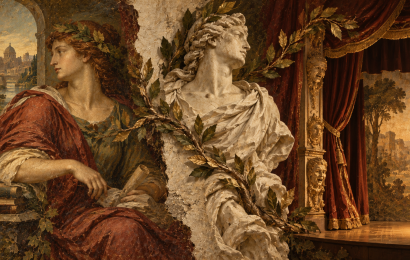
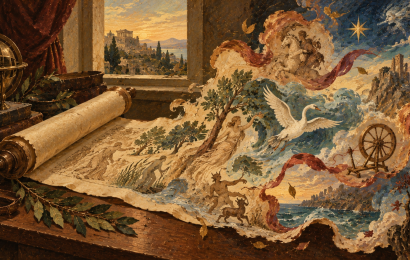
The Anti-Epic: How Ovid Quietly Broke Every Rule of Epic Poetry

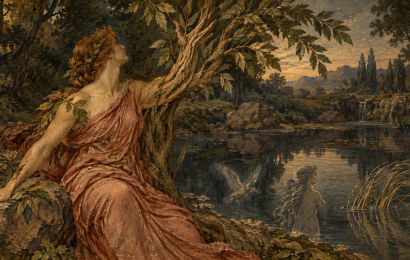
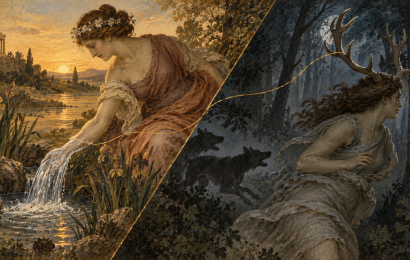
Escape Hatch or Death Sentence? The Two Faces of Transformation in Ovid

Ovid After Ovid: How One Roman Poem Colonised Western Art

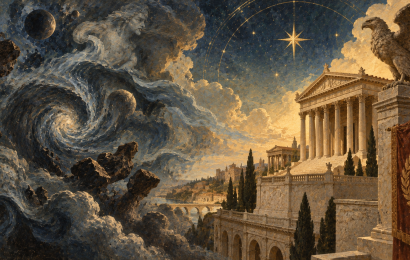
From Chaos to Caesar: The Strange Political Arc of Ovid’s Epic

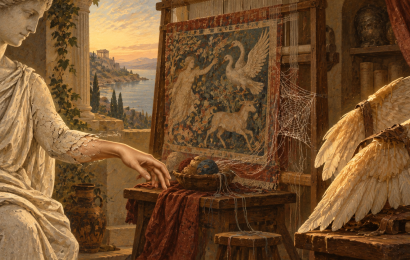
Art Imitating Life Imitating Art: Ovid’s Obsession With Made Things

Voice, Silence, and Violence: Reading Metamorphoses Through the Women Who Can’t Speak

Author: pulusaur

How Narayan Writes: Irony, Symbols, and the Art of the Understated Novel

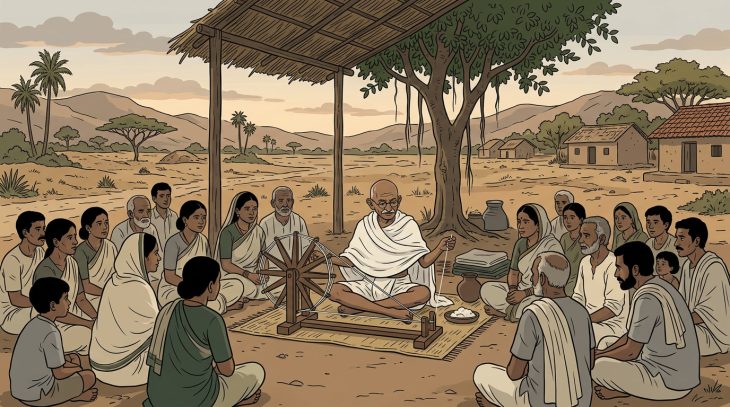
A Reader’s Guide to Narayan’s Style, Technique, and the Craft of Waiting for the Mahatma When students first read R.K. Narayan, they sometimes mistake his style for simplicity. His sentences […]

April 25, 2026April 25, 2026 pulusaur essays, guides

Love, Sacrifice, and the Spinning Wheel: Major Themes in Waiting for the Mahatma

From Private Desire to Public Commitment — Narayan’s Most Complex Novel One of the first things readers notice about Waiting for the Mahatma is that Sriram is not a typical […]

April 25, 2026April 25, 2026 pulusaur essays, guides

Gandhi on the Page: History, Non-Violence, and the Fictional Mahatma

How Narayan Brings India’s Independence Struggle into the World of Malgudi Waiting for the Mahatma is unusual in R.K. Narayan’s career. His other Malgudi novels are largely self-contained: a small […]

April 25, 2026April 25, 2026 pulusaur essays, guides

Sriram of Malgudi: The Unlikely Hero Who Changed India

Understanding the Novel’s Protagonist and the Comedy of Good Intentions At the start of R.K. Narayan’s Waiting for the Mahatma (1955), we meet Sriram: twenty years old, financially comfortable, and […]

April 25, 2026April 25, 2026 pulusaur essays, guides

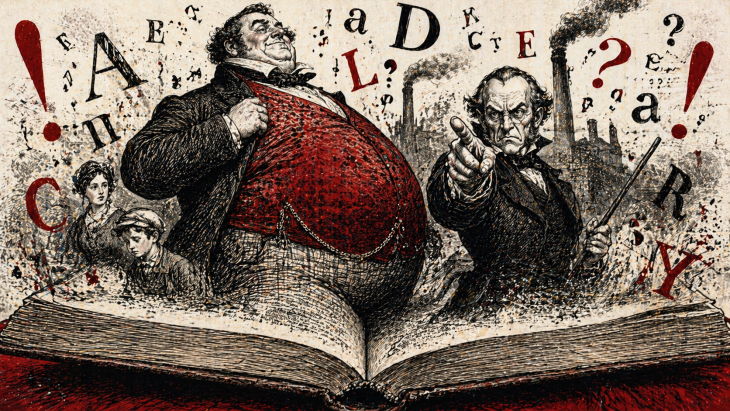
How Dickens Tells the Story: Narrative Technique and Satire in Hard Times

Every author makes choices about how to tell a story — choices about voice, structure, language, and form that are as significant as the story’s content. In Hard Times, Dickens […]

April 25, 2026April 25, 2026 pulusaur essays, guides

Louisa and the Cage of Marriage: Gender and Domesticity in Hard Times

Victorian England had a very clear idea of what women were for. They were to be wives, mothers, and domestic managers — the ‘angel in the house,’ as the poet […]

April 25, 2026April 25, 2026 pulusaur essays, guides

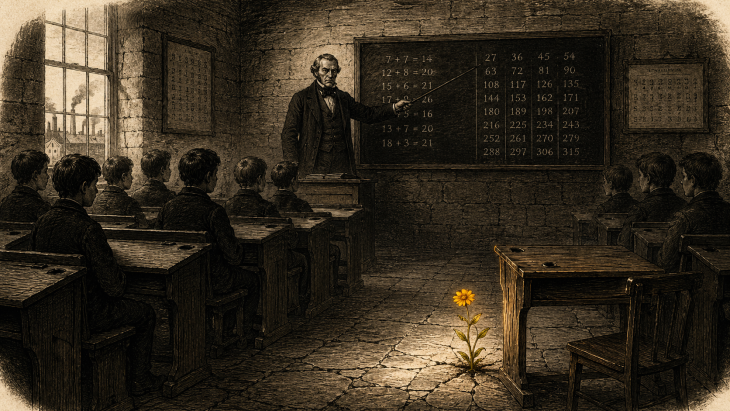
Coketown and Its People: Class, Labour, and Industrial Society in Hard Times

Hard Times is set in a fictional industrial town called Coketown — a name that is itself a declaration. ‘Coke’ refers to the processed coal fuel that powered Victorian factories, […]

April 25, 2026April 25, 2026 pulusaur essays, guides

Fact vs. Fancy: The Central Conflict in Hard Times

When Charles Dickens published Hard Times in 1854, he was writing in response to a very specific moment in British history — a moment defined by factories, statistics, and a […]

April 25, 2026April 25, 2026 pulusaur essays, guides

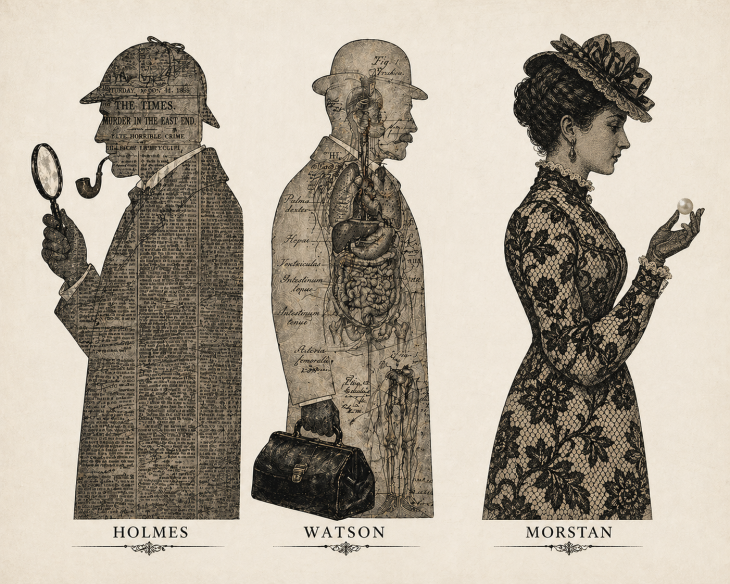
Three Portraits: Holmes, Watson, and Morstan in The Sign of Four

Understanding character as the engine of Victorian detective fiction A mystery is only as compelling as the people at its centre. The Sign of Four gives us three major characters whose personalities […]

April 25, 2026April 25, 2026 pulusaur essays, guides

Reason and Its Shadows: Science, Rationalism, and the Occult in The Sign of Four

Holmes is the voice of reason — but the novel is haunted by what reason cannot explain Sherlock Holmes is, above all else, a rationalist. He believes in evidence, logic, […]
April 25, 2026April 25, 2026 pulusaur essays, guides

Posts navigation

Older posts
Recent Posts
  • The Anti-Epic: How Ovid Quietly Broke Every Rule of Epic Poetry
  • Escape Hatch or Death Sentence? The Two Faces of Transformation in Ovid
  • Ovid After Ovid: How One Roman Poem Colonised Western Art
  • From Chaos to Caesar: The Strange Political Arc of Ovid’s Epic
  • Art Imitating Life Imitating Art: Ovid’s Obsession With Made Things
Recent Comments
  • StevePealt on The Ever-Relevant Chaos of W.B. Yeats’s “The Second Coming”
  • EddieMip on Sophocles’ “OEDIPUS REX”
  • StevePealt on Blogging and Web Design
  • DanielAsymn on Sophocles’ “OEDIPUS REX”
  • LeonardIconi on Break Break Break
Proudly powered by WordPress | Theme: NewsAnchor by aThemes.