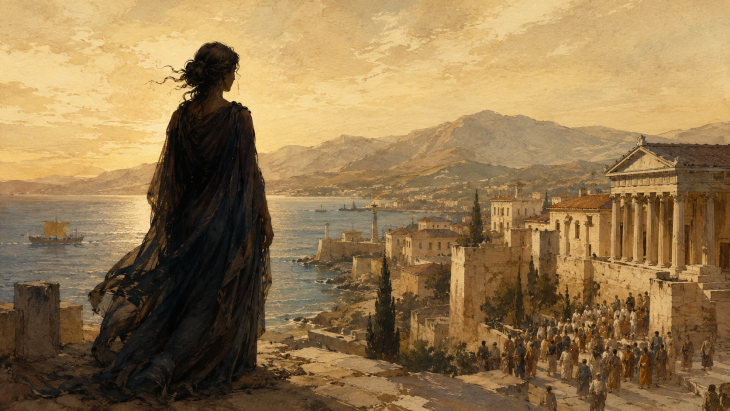
By the time Lysistrata premiered in 411 BCE, Athens and Sparta had already been at war, on and off, for two decades. Imagine a city where an entire generation had […]
Picture a room full of the most powerful men in a city, utterly stuck. Not because an enemy army is at the gates, not because the treasury has run dry, […]
Few characters in world literature have been read as violently in opposite directions as Medea. To some critics and directors, she is one of the earliest and most powerful indictments […]
Greek tragedy generally ran on a kind of moral accounting, however brutal: characters who overreached, who committed hubris against the gods or the natural order, eventually paid for it, often […]
Every city needs someone to define itself against. For fifth-century Athens, watching Euripides’ Medea unfold in 431 BCE, that someone walked onto the stage speaking Greek perfectly, dressed like any […]
You’ve read the text. You think understood it. Now what? This is the gap most students fall into. You finish reading a piece of prose, sit down to write about […]
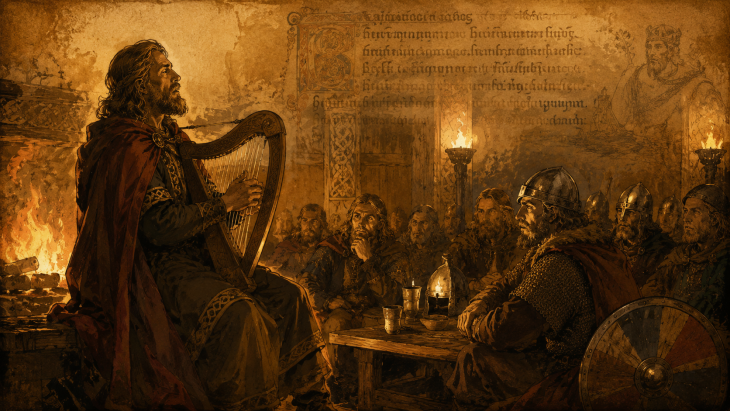
Before students analyse a single theme in Beowulf, it helps to understand something more basic: how the poem sounded, how it was likely composed, and how astonishingly close it came […]
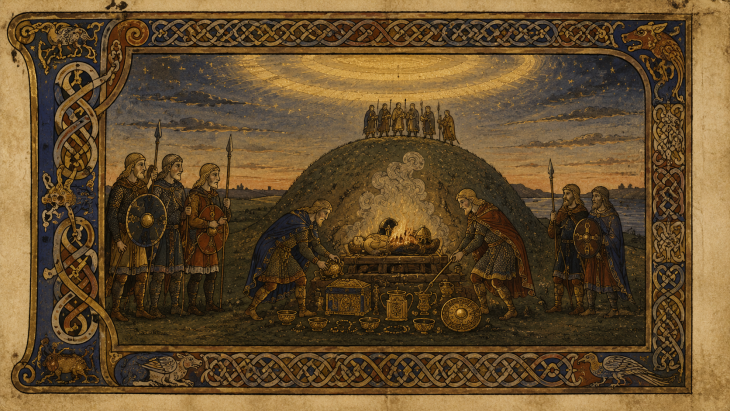
One of the first puzzles students encounter in Beowulf is a strange doubleness in its worldview. The characters live in a pre-Christian Scandinavian setting, cremate their dead, believe in monsters […]
Beowulf is often introduced to students as a “monster poem,” and on the surface, that is true — the plot is structured around three fights with three different creatures. But […]
When modern readers first meet Beowulf, he can seem larger than life — a man who swims for days, tears a monster’s arm off with his bare hands, and announces […]