By the time Lysistrata premiered in 411 BCE, Athens and Sparta had already been at war, on and off, for two decades. Imagine a city where an entire generation had […]
Picture a room full of the most powerful men in a city, utterly stuck. Not because an enemy army is at the gates, not because the treasury has run dry, […]
Few characters in world literature have been read as violently in opposite directions as Medea. To some critics and directors, she is one of the earliest and most powerful indictments […]
Greek tragedy generally ran on a kind of moral accounting, however brutal: characters who overreached, who committed hubris against the gods or the natural order, eventually paid for it, often […]
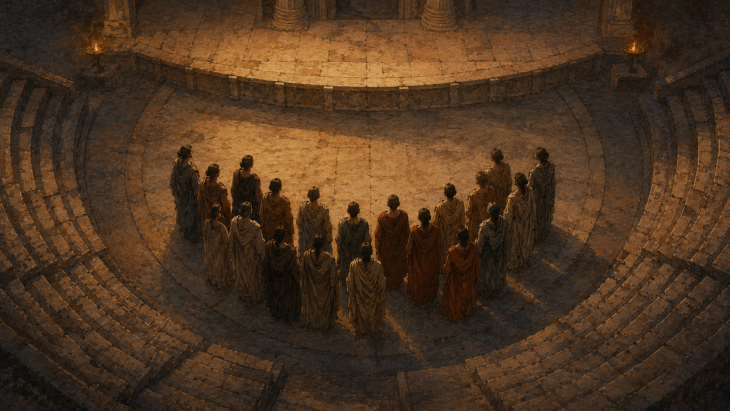
Fifteen Corinthian women stand in the orchestra of the Theatre of Dionysus, watching a foreign princess plan the murder of her own children, and they do not stop her. They […]
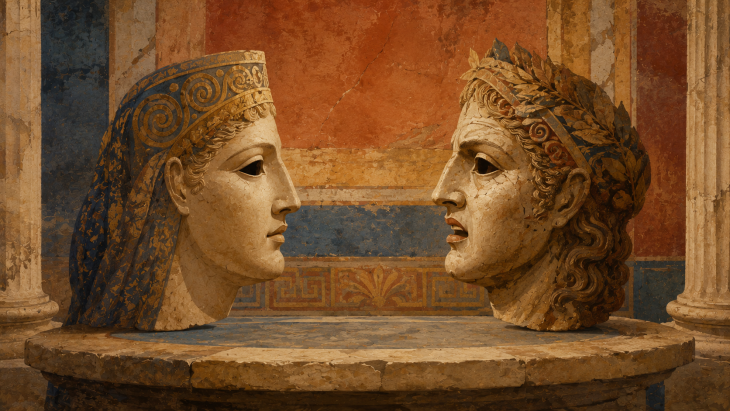
Long before the knife appears, Medea is already a bloodbath — just a rhetorical one. Euripides gives his two leads a series of verbal duels that function like sword fights: […]
There is a moment in Medea where the title character stands alone on stage, knife-logic already decided, and argues with herself out loud about whether to go through with killing […]
Every city needs someone to define itself against. For fifth-century Athens, watching Euripides’ Medea unfold in 431 BCE, that someone walked onto the stage speaking Greek perfectly, dressed like any […]
Homer never calls Odysseus brave in the poem’s opening line. He calls him polytropos — “the man of many turns,” or “of many ways,” depending on the translator, a word […]
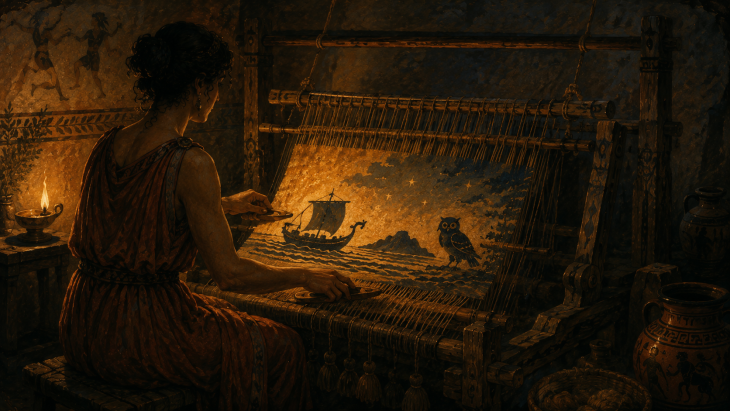
While Odysseus is off blinding cyclopes and resisting witches, the Odyssey quietly runs a second plot back home that is, by any fair measure, just as hard as anything he […]